
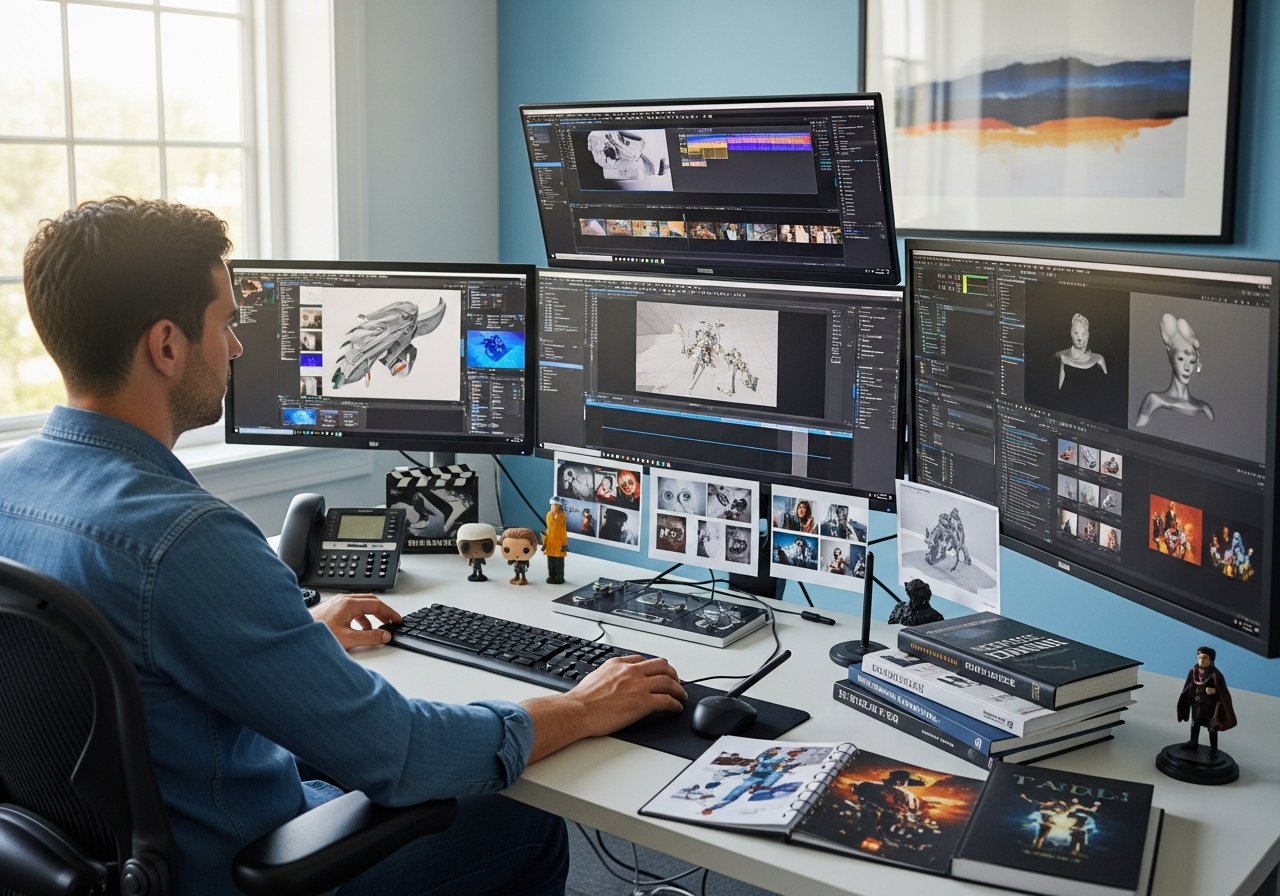
Canada has emerged as a global powerhouse in the VFX industry, with Vancouver and Montreal leading the charge as premier destinations for visual effects production. The compositing discipline enjoys particularly high demand in these hubs, where studios require artists skilled in Nuke-heavy workflows and detailed breakdown presentations that showcase technical mastery alongside creative vision.
The Canadian VFX market has experienced unprecedented growth, with government tax incentives driving major international productions to establish roots in these cities. However, many aspiring compositors make critical portfolio mistakes when applying to Canadian studios, often presenting generic showreels that fail to highlight the specific technical skills and visual styles these employers prioritize. Understanding how to craft a portfolio that speaks directly to Canadian hiring practices can significantly increase your chances of landing coveted compositor positions.
Understand the Canadian VFX Landscape
Canada’s VFX ecosystem revolves around two primary hubs that have attracted billions in production investment due to favorable tax incentives and skilled talent pools. Vancouver dominates with powerhouse studios like Image Engine and Method Studios, while Montreal has cultivated a thriving scene anchored by Rodeo FX and Hybride Technologies. These tax incentives, ranging from 25-40% depending on the province, have made Canadian studios increasingly competitive for major Hollywood blockbusters and streaming content.
Compositing plays a crucial role in Canadian VFX projects, with studios consistently seeking artists who can seamlessly integrate complex CG elements with live-action footage. The emphasis on photo-realistic creature work, environment extensions, and intricate multi-pass compositing means that Canadian employers look for portfolios demonstrating technical precision alongside creative problem-solving abilities. The compositing pipeline in these studios heavily favors Nuke workflows, making proficiency in this software essential for portfolio success.
Understanding the types of projects these studios handle helps inform portfolio choices, as Canadian facilities often specialize in specific genres like superhero films, sci-fi blockbusters, and high-end television series that require sophisticated compositing work.
Key Canadian Studios Hiring Compositors
The Canadian VFX landscape features several major studios actively recruiting compositing talent for diverse project types. Each studio has developed specializations that influence their hiring preferences and portfolio expectations.
| Studio | Location | Notable Projects | Compositing Focus |
|---|---|---|---|
| Rodeo FX | Montreal | Game of Thrones, Stranger Things | Creature integration, environment extensions |
| Image Engine | Vancouver | Spider-Man films, The Umbrella Academy | Photo-real creatures, complex tracking |
| Method Studios | Vancouver | The Mandalorian, Marvel projects | Digital environments, vehicle integration |
| Hybride Technologies | Montreal | 300 series, Fantastic Beasts | Matte paintings, crowd integration |
| DNEG Vancouver | Vancouver | Dune, Tenet | Large-scale environments, atmospheric effects |
| Framestore | Montreal | Blade Runner 2049, Gravity | Space environments, complex simulations |
Why Tailor for Canadian Hiring Practices
Canadian VFX recruiters have developed distinct preferences that differ significantly from other international markets, making portfolio customization essential for success. Understanding these specific expectations can dramatically improve your application’s effectiveness.
- Detailed technical breakdowns are considered mandatory, not optional – Canadian studios expect to see your complete compositing process
- Showreel length should be strictly maintained between 1-2 minutes, as Canadian recruiters prefer concise, impactful presentations
- Nuke proficiency must be prominently displayed through node graph screenshots and workflow documentation
- Problem-solving approach should be clearly demonstrated, showing how you overcame specific technical challenges
- Integration skills take priority over flashy effects, reflecting the studios’ focus on seamless photo-realistic compositing
- Portfolio organization should follow a clear hierarchy with strongest work presented first and supporting breakdowns easily accessible
Core Elements of a Compositing Portfolio
A successful Canadian-style compositing portfolio follows a strategic structure that immediately captures attention while providing the technical depth that recruiters demand. The portfolio should function as both a creative showcase and a technical demonstration of your problem-solving abilities.
Each element must serve a specific purpose in telling your professional story, from the opening shot that establishes your skill level to the detailed breakdowns that prove your technical competency. Canadian studios particularly value portfolios that demonstrate versatility across different project types while maintaining consistent quality standards.
- Leading with your strongest, most technically complex shot to immediately establish credibility and capture recruiter attention
- Including comprehensive breakdown reels that showcase your complete compositing process from initial plates to final renders
- Demonstrating Nuke-focused workflows through node graph documentation and technical problem-solving approaches
- Showcasing variety in shot types including creature integration, environment work, and complex multi-pass compositing
- Providing clear before-and-after comparisons that highlight your specific contributions to each project
- Maintaining consistent quality standards across all portfolio pieces with no weak shots included as filler material
- Including brief shot descriptions that explain technical challenges and solutions without overwhelming the visual presentation
Breakdown Reel Essentials
The breakdown reel serves as the technical foundation of your compositing portfolio, providing Canadian recruiters with detailed insight into your workflow and problem-solving capabilities. This component should methodically deconstruct your compositing process, showing each layer’s contribution to the final result while highlighting sophisticated techniques like advanced rotoscoping, multiple pass integration, and complex color grading workflows.
Effective breakdowns demonstrate your understanding of the entire compositing pipeline, from initial plate preparation through final color correction and delivery. The emphasis should be on CG and live-action integration, showcasing how you handle edge work, spill suppression, and atmospheric perspective to achieve seamless photorealistic results. Canadian studios particularly value seeing your approach to solving integration challenges, such as matching lighting conditions between CG elements and practical photography.
Your breakdown presentation should include clear labeling of each compositing pass, explanation of technical decisions, and demonstration of quality control processes. This level of detail shows Canadian employers that you understand not just the tools, but the artistic and technical reasoning behind professional compositing decisions that meet broadcast and theatrical standards.
Shot Selection for Canadian Studios
Canadian VFX studios gravitate toward specific types of compositing work that align with their project portfolios and client expectations. Understanding these preferences allows you to curate portfolio content that directly addresses what hiring managers actively seek in potential team members.
The selection process should prioritize shots that demonstrate technical complexity while maintaining the photorealistic quality standards that define Canadian studio output. Studios like Image Engine and Rodeo FX consistently work on projects requiring seamless integration of fantastical elements into believable environments, making this skill set particularly valuable for portfolio inclusion.
| Shot Type | Why Canadian Studios Love It | Example Projects |
|---|---|---|
| Environment Extensions | Core requirement for most blockbuster productions | Marvel films, sci-fi series |
| Creature Integration | Specialty of Image Engine and similar studios | Spider-Man creatures, Game of Thrones dragons |
| Matte Paintings | High demand for period and fantasy projects | Historical dramas, fantasy epics |
| Vehicle Compositing | Technical complexity showcases advanced skills | Action films, car commercials |
| Crowd Integration | Demonstrates multi-element compositing mastery | Battle sequences, stadium scenes |
| Atmospheric Effects | Essential for mood and realism in most shots | Weather effects, environmental storytelling |
Environment and Matte Comp Shots
Environment and matte painting compositing represents one of the most sought-after skill sets in Canadian VFX studios, requiring both technical precision and artistic sensibility to achieve convincing results.
- Focus on seamless perspective matching between 3D environments and practical plates through precise camera tracking and projection techniques
- Demonstrate atmospheric perspective understanding by showing proper depth cues, color temperature shifts, and contrast falloff in distant elements
- Showcase edge work excellence in blending CG environments with live-action foreground elements, paying special attention to interactive lighting
- Include complex multi-layered compositions that show your ability to manage dozens of passes while maintaining organized node structures
- Present problem-solving examples where you overcame challenging integration issues like mismatched lighting conditions or difficult keying scenarios
Creature and Character Compositing
Creature compositing represents a flagship specialty for many Canadian studios, particularly Vancouver-based facilities like Image Engine that have built reputations on delivering photo-realistic creature work for major franchises. This type of work demands exceptional attention to detail in areas like subsurface scattering integration, interactive lighting between creatures and environments, and subtle animation adjustments that sell the illusion of physical presence.
Success in creature compositing requires mastery of color matching techniques that account for complex lighting scenarios, including situations where creatures must appear to cast and receive shadows naturally within practical environments. Canadian studios particularly value artists who can handle the technical challenges of integrating highly detailed CG creatures with live-action plates while maintaining consistent visual quality across varying lighting conditions and camera movements.
Technical Skills to Showcase
Canadian VFX studios prioritize specific technical competencies that align with their production workflows and quality standards. Nuke serves as the primary compositing platform across most Canadian facilities, making deep proficiency in this software essential for portfolio success. Your technical demonstrations should emphasize advanced Nuke workflows, including 3D compositing techniques, sophisticated tracking solutions, and efficient node organization that reflects professional production practices.
Beyond software proficiency, Canadian employers value artists who understand the broader technical pipeline, including color space management, multi-pass rendering integration, and quality control processes that ensure deliverables meet broadcast and theatrical standards. Showcasing familiarity with industry-standard tools and workflows demonstrates your readiness to integrate quickly into existing production teams without extensive technical training.
Nuke Workflow Breakdowns
Detailed Nuke workflow documentation provides Canadian recruiters with direct insight into your technical approach and professional workflow organization. This documentation should demonstrate both efficiency and sophistication in your node organization, showing how you structure complex compositing scripts for maintainability and collaboration.
Your workflow breakdowns should emphasize the specific node types and techniques that Canadian studios rely on for their high-end production work. Include examples of advanced tracking setups, sophisticated keying approaches, and complex color correction pipelines that showcase your understanding of professional compositing standards and best practices.
| Node Type | Use Case | Canadian Studio Example |
|---|---|---|
| RotoPaint | Advanced rotoscoping and paint work | Method Studios creature edge refinement |
| Primatte | Professional chroma key extraction | Rodeo FX greenscreen integration |
| ColorCorrect | Precise color matching and grading | Image Engine lighting integration |
| Tracker | Camera and object tracking | DNEG environment extensions |
| Merge | Layer blending and compositing operations | Framestore multi-element integration |
Structure Your Showreel
The structural organization of your compositing showreel can determine whether Canadian recruiters engage with your full portfolio or move on after the first few seconds. The ideal structure follows a carefully planned progression that immediately establishes your skill level, maintains engagement throughout the viewing experience, and concludes with memorable work that reinforces your capabilities.
- Open with your most impressive and technically complex shot to immediately capture attention and establish your skill level
- Follow with 3-4 strong supporting shots that demonstrate variety in project types and technical approaches
- Maintain a runtime between 60-90 seconds maximum, as Canadian recruiters prefer concise presentations that respect their time
- Include brief title cards that identify your specific role and contributions without disrupting the visual flow
- Ensure smooth transitions between shots that maintain professional presentation standards and viewing momentum
- Conclude with another standout piece that leaves a lasting impression and reinforces your technical capabilities
- Provide easy access to detailed breakdowns through clear navigation or accompanying documentation
Timing and Flow Tips
Canadian VFX recruiters typically make initial judgments within the first 10-15 seconds of viewing a showreel, making your opening sequence critical for maintaining their attention. The pacing should allow sufficient time to appreciate the complexity of each shot while maintaining momentum that keeps viewers engaged throughout the entire presentation.
Effective flow management involves strategic shot ordering that tells a coherent story about your capabilities while avoiding repetitive content that might lose recruiter interest. Each shot transition should feel natural and purposeful, contributing to an overall narrative about your technical growth and diverse skill set rather than simply presenting a random collection of work samples.
Personal Website Integration
- Create dedicated project pages that expand on each showreel shot with detailed technical breakdowns and process documentation
- Optimize for mobile viewing since many Canadian recruiters review portfolios on tablets and smartphones during commutes or breaks
- Implement fast loading times and reliable hosting that can handle traffic spikes when your portfolio gets shared within studio networks
- Include easily accessible contact information and clear calls-to-action that make it simple for recruiters to reach out directly
- Maintain consistent branding and professional presentation across all portfolio platforms including ArtStation and Behance profiles
- Regularly update content to reflect your latest work and evolving technical skills, showing active engagement in professional development
Tailoring for Specific Canadian Hubs
Vancouver and Montreal have developed distinct VFX ecosystems with different stylistic preferences and technical focuses that should inform your portfolio customization strategy. Vancouver’s market tends toward photo-realistic creature work and large-scale environment integration, reflecting the influence of major studios like Image Engine and Method Studios that specialize in blockbuster film work.
Montreal’s VFX scene has cultivated expertise in hybrid approaches that blend practical and digital techniques, with studios like Rodeo FX and Framestore developing signature styles that emphasize creative problem-solving and artistic innovation alongside technical excellence. Understanding these regional preferences allows you to emphasize portfolio elements that align with each market’s specific demands and project types.
| Hub | Signature Style | Portfolio Adjustments | Target Studios |
|---|---|---|---|
| Vancouver | Photo-realistic creatures and environments | Emphasize technical precision and integration | Image Engine, Method, DNEG |
| Montreal | Hybrid practical-digital approaches | Showcase creative problem-solving skills | Rodeo FX, Framestore, Hybride |
| Vancouver Film | Blockbuster-scale productions | Include large-scale environment work | ILM Vancouver, Sony Pictures |
| Montreal TV/Streaming | High-end television production | Demonstrate efficiency and consistency | Rodeo FX, Mackevision |
| Vancouver Gaming | Interactive and real-time applications | Show understanding of real-time constraints | EA Vancouver, Relic |
| Montreal Commercial | Brand-focused visual storytelling | Include polished commercial work | Sid Lee, Lune Rouge |
Vancouver vs Montreal Portfolio Tweaks
When targeting Vancouver positions, emphasize portfolio elements that demonstrate your capability to handle the creature-heavy and environment-focused work that dominates this market, particularly for studios like ILM and Image Engine that specialize in photo-realistic character integration. Include detailed breakdowns showing complex tracking work, advanced hair and fur compositing, and sophisticated lighting integration that meets the exacting standards of blockbuster film production.
For Montreal applications, adjust your portfolio to highlight creative problem-solving and hybrid technique mastery that aligns with studios like Rodeo FX and their innovative approaches to combining practical and digital elements. Emphasize work that shows artistic sensibility alongside technical competence, demonstrating your ability to contribute to the collaborative creative process that defines Montreal’s VFX culture.
Common Mistakes to Avoid
Portfolio mistakes can instantly disqualify even talented artists from Canadian VFX positions, making awareness of common pitfalls essential for application success. Many applicants underestimate how thoroughly Canadian recruiters evaluate technical presentation alongside creative work, leading to easily avoidable errors that derail promising applications.
- Including shots without detailed technical breakdowns, which Canadian studios consider mandatory for evaluating your actual contributions and skill level
- Poor audio quality or distracting music that detracts from the visual presentation and reflects unprofessional presentation standards
- Generic showreels that fail to address specific Canadian studio preferences, showing lack of research and targeted application effort
- Excessive reel length that loses recruiter attention, violating the preferred 1-2 minute timeframe that Canadian employers expect
- Weak opening shots that fail to immediately establish your skill level, causing recruiters to form negative first impressions
- Missing contact information or unclear portfolio navigation that creates barriers to follow-up communication from interested employers
- Outdated work that doesn’t reflect current industry standards or your evolving technical capabilities and professional growth
Quality Control Checklist
A comprehensive pre-submission quality control process can prevent portfolio mistakes that undermine otherwise strong applications to Canadian VFX studios. This final review should address both technical and presentation elements that influence recruiter decisions.
| Issue | Fix | Impact on Canadian Apps |
|---|---|---|
| Compression artifacts | Use high-quality encoding settings | Critical for technical evaluation |
| Missing breakdown documentation | Create detailed process videos | Mandatory for serious consideration |
| Inconsistent aspect ratios | Standardize to 16:9 or 2.35:1 | Reflects professional standards |
| Unclear role attribution | Add specific contribution credits | Essential for skill assessment |
| Broken website links | Test all navigation before submission | Prevents follow-up engagement |
| Outdated contact information | Verify all communication channels | Blocks potential job opportunities |
Job Application Strategy
Successful applications to Canadian VFX studios require strategic approaches that go beyond submitting generic portfolios to online portals. The most effective strategy involves researching specific studio projects and tailoring your application materials to demonstrate understanding of their particular workflows and project requirements. Custom cover letters that reference specific studio work and explain how your skills align with their current needs significantly outperform generic applications.
Building relationships within Canadian VFX circles through professional networking can provide insider knowledge about upcoming projects and hiring priorities that aren’t publicly advertised. LinkedIn networking with current studio employees, participation in industry events, and engagement with Canadian VFX communities create opportunities for referrals and direct recommendations that carry substantial weight in hiring decisions.
The application timing strategy also matters, as Canadian studios often hire in cycles aligned with major project schedules and fiscal year planning. Understanding these patterns and positioning your applications to coincide with peak hiring periods can dramatically improve your success rate compared to random application timing that may miss optimal opportunity windows.
Application Package Essentials
- Customized showreel edited specifically for the target studio’s project types and technical requirements
- Tailored resume highlighting relevant experience and technical skills that match the studio’s current needs
- Detailed breakdown PDFs providing comprehensive documentation of your compositing process and problem-solving approaches
- Studio-specific cover letter demonstrating research into their recent projects and explaining your potential contributions
- Professional references who can speak to your technical abilities and collaborative work style in production environments
- Portfolio website optimized for Canadian recruiter preferences with fast loading and mobile-friendly navigation
Networking in Canadian VFX
The Canadian VFX industry maintains a relatively close-knit professional community where personal relationships and referrals play significant roles in hiring decisions. Vancouver Film School alumni gatherings and SIGGRAPH Canada chapter events provide excellent opportunities to meet industry professionals and learn about upcoming projects and hiring plans before they become public knowledge.
Building genuine professional relationships through industry mentorship programs and collaborative projects can lead to recommendations that bypass traditional application processes entirely. Many Canadian studios prefer hiring artists who come recommended by trusted team members, making networking investment as valuable as portfolio development for long-term career success in the Canadian VFX market.