
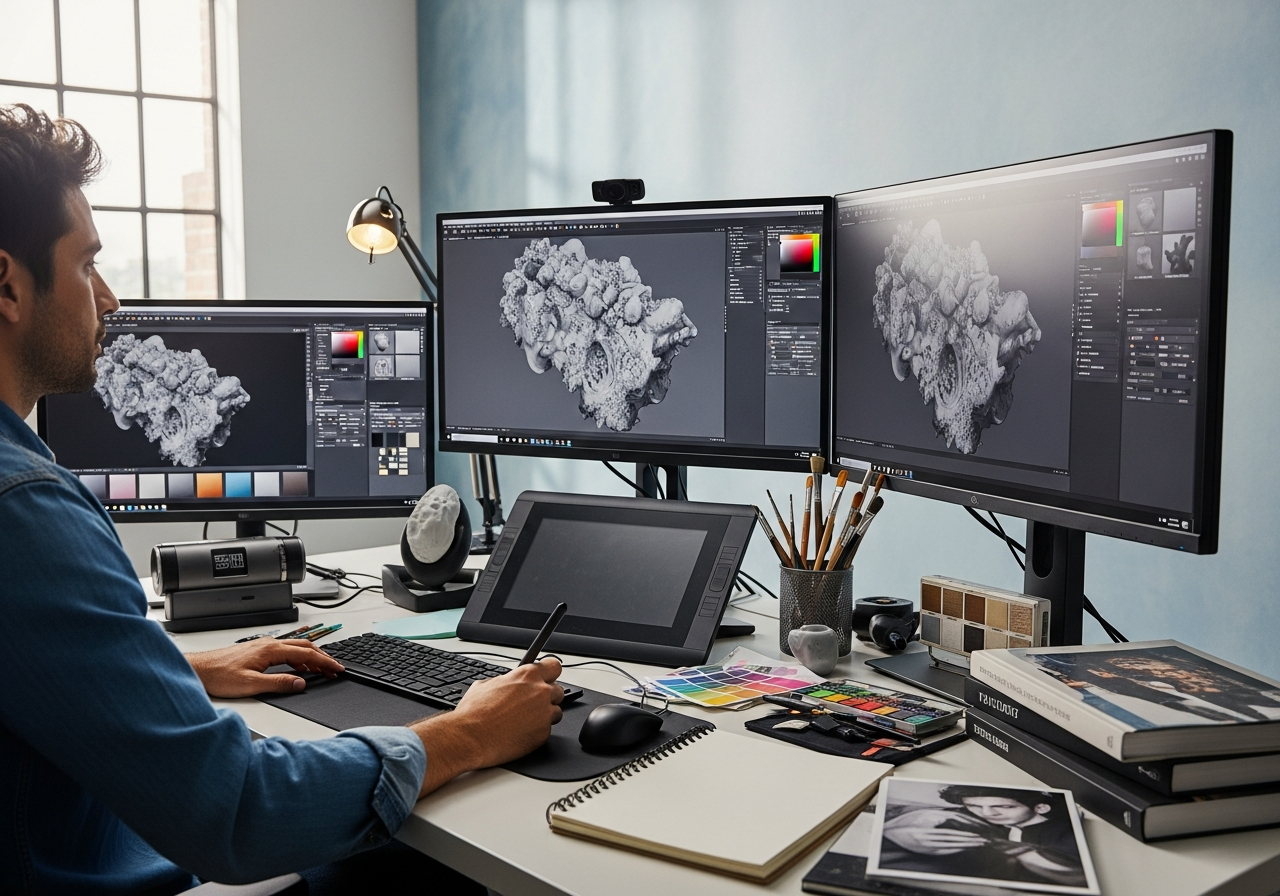
Canada’s VFX and gaming industry is experiencing unprecedented growth, with over 52 junior texture artist positions currently available across Vancouver, Montreal, and Toronto. A junior texture artist role involves creating high-quality surface materials and textures for visual effects, video games, and animation projects, requiring both technical expertise and artistic vision. These positions typically serve as entry points into Canada’s thriving digital entertainment sector, where studios demand professionals who can seamlessly blend creativity with cutting-edge technology.
Through analysis of job postings from leading Canadian studios including Eyeline Studios, Sony Pictures Imageworks, and Sprung Studios, a clear pattern emerges: successful candidates need a minimum of 2+ years of experience and proficiency in industry-standard software like Substance Painter and Mari. Canadian studios particularly value artists who can create hero assets—the primary focus objects that require the highest level of detail and craftsmanship. This comprehensive guide outlines exactly what these studios seek in junior texture artists, from essential technical skills to portfolio presentation strategies.
Essential Technical Skills for Junior Texture Artists
Canadian studios prioritize candidates with comprehensive technical foundations in modern texturing workflows. The emphasis on Substance Painter proficiency reflects the industry’s shift toward node-based texturing systems that streamline production pipelines. Studios like Sony Pictures Imageworks and Eyeline Studios specifically seek artists who understand physically-based rendering (PBR) workflows, as these techniques form the backbone of contemporary VFX and game development projects.
Beyond software proficiency, Canadian employers expect junior artists to demonstrate solid understanding of shading fundamentals and material properties. The ability to create hero assets—those primary focus elements requiring exceptional detail—distinguishes competitive candidates from the broader applicant pool. Studios consistently emphasize that technical skills must serve artistic vision, making the combination of software mastery and creative sensibility essential for success.
- Substance Painter expertise for procedural texturing and smart materials
- Advanced Photoshop skills for texture creation and photo manipulation
- Mari proficiency for high-resolution texture painting on complex geometry
- Maya knowledge for UV mapping and model preparation
- PBR workflow understanding including metallic and roughness maps
- ZBrush familiarity for sculpted detail extraction
- Arnold or V-Ray rendering knowledge for material testing
Must-Have Software Proficiency
The software landscape for junior texture artists in Canada reflects industry standards established by major studios. Vancouver-based companies particularly emphasize Substance Suite proficiency due to its integration with established VFX pipelines. Montreal studios, with their gaming focus, often prioritize real-time rendering workflows that require specific technical approaches.
| Software | Required Level | Why Canadian Studios Demand It |
|---|---|---|
| Substance Painter | Advanced | Industry standard for PBR texturing workflows |
| Adobe Photoshop | Advanced | Essential for texture creation and digital painting |
| Mari | Intermediate | High-res texture painting for VFX hero assets |
| Maya | Intermediate | UV mapping and model preparation workflows |
| Substance Designer | Beginner | Procedural material creation for efficiency |
| ZBrush | Beginner | Detail extraction and displacement maps |
PBR and Rendering Fundamentals
Physically-Based Rendering (PBR) represents the cornerstone of modern texturing workflows in Canadian studios. This approach simulates realistic light interaction with surfaces using scientifically accurate principles, creating materials that respond authentically under various lighting conditions. The metallic workflow, preferred by most Canadian VFX houses, relies on base color, metallic, and roughness maps to define material properties accurately.
Canadian institutions like ISART Digital and CG Spectrum have established curriculum standards that emphasize hands-on PBR implementation. Students learn to create materials that maintain consistency across different lighting scenarios, a crucial requirement for production environments where assets move between multiple departments. Understanding energy conservation principles ensures textures behave realistically when integrated into complex scenes.
The technical foundation extends beyond map creation to encompass shader networks and material optimization. Junior artists must grasp how texture resolution affects performance, particularly in real-time applications common in Montreal’s gaming sector. Vancouver VFX studios expect candidates to understand render-time considerations and how texture choices impact overall production efficiency.
Experience and Education Expectations
The Canadian texture artist job market presents unique challenges for junior candidates, as most positions require 2+ years of professional experience despite being labeled “junior” roles. Vancouver and Montreal studios prioritize demo reels over formal education credentials, reflecting the industry’s emphasis on demonstrable skills rather than academic achievements. This practical approach allows talented self-taught artists to compete alongside traditional graduates.
| Level | Years Exp | Education | Canadian Examples |
|---|---|---|---|
| Entry Junior | 0-1 years | Portfolio preferred | Rare openings at smaller studios |
| Junior | 2-3 years | Degree or equivalent | Eyeline Studios, Sprung Studios |
| Intermediate | 3-5 years | Specialized training | Sony Imageworks Vancouver |
| Senior | 5+ years | Industry certification | Major VFX houses |
Artistic and Creative Qualities
Canadian studios seek junior texture artists who demonstrate keen observational skills and deep understanding of real-world material properties. The ability to study and recreate how light interacts with various surfaces—from weathered metal to organic skin—separates exceptional candidates from technically proficient but artistically limited applicants. Studios consistently emphasize that technical tools serve artistic vision, not the other way around.
Attention to detail extends beyond surface-level accuracy to encompass subtle variations that make textures feel authentic and lived-in. Canadian employers value artists who understand that perfect cleanliness rarely exists in reality, and that strategic imperfections create believability. This philosophy aligns with the industry’s movement toward more naturalistic and grounded visual approaches across both VFX and gaming projects.
Consistency of artistic style represents another crucial quality, particularly for projects requiring multiple artists to work cohesively. Junior artists must demonstrate ability to match established visual directions while contributing creative solutions within defined parameters. Anatomical knowledge becomes essential for organic texturing work, where understanding underlying structures informs surface detail decisions.
The creative problem-solving aspect of texture artistry cannot be understated in Canadian studio environments. Artists frequently encounter technical limitations or artistic challenges that require innovative approaches, making adaptability and creative thinking valuable assets beyond pure technical execution.
Real-World Reference Mastery
Successful texture artists develop sophisticated approaches to gathering and utilizing photographic references. Canadian studios expect candidates to demonstrate understanding of how lighting conditions affect material appearance and how to extract useful information from various reference sources. The ability to see beyond surface appearance to underlying material properties distinguishes professional-level work from amateur attempts.
- Study natural materials like weathered wood, oxidized metal, and stone formations
- Capture reference photography with consistent lighting for accurate color information
- Analyze how surface irregularities create visual interest without overwhelming detail
- Understand material aging processes to create believable wear patterns
- Develop library organization systems for efficient reference management
- Practice extracting tillable patterns from photographic sources
Understanding Materials and Anatomy
Anatomical consistency forms the foundation of convincing organic texture work in Canadian VFX and gaming projects. Junior artists must understand how skin behaves differently across various body regions, how muscle structure affects surface appearance, and how age and environmental factors influence organic material properties. This knowledge extends beyond human anatomy to encompass creature work and fantasy applications.
Material science understanding enables artists to create convincing inorganic surfaces that respond appropriately to environmental factors. Knowledge of how metals corrode, how fabrics wear, and how plastics age informs artistic decisions throughout the texturing process. Canadian studios particularly value this scientific approach as it supports the industry’s emphasis on photorealistic results.
Loyalty to art direction represents a professional skill that junior artists must develop early in their careers. The ability to interpret and execute creative briefs while maintaining personal artistic standards requires diplomatic balance and clear communication. Studios seek candidates who can advocate for artistic quality while respecting production constraints and directorial vision.
Key Soft Skills and Studio Fit
Canadian texture artist positions demand strong collaboration abilities as artists work closely with lighting specialists, look development teams, and art directors throughout production cycles. The ability to receive and implement feedback constructively while maintaining artistic integrity represents a crucial professional skill. Studios value junior artists who ask clarifying questions and propose alternative solutions when facing creative challenges.
- Develop active listening skills to understand feedback intent rather than just literal instructions
- Practice deadline management by breaking complex tasks into manageable milestones
- Cultivate diplomatic communication when discussing creative differences with supervisors
- Build systematic approaches to file organization and version control for collaborative workflows
- Establish regular check-in routines with team leads to ensure project alignment
Portfolio and Demo Reel Tips
Portfolio presentation can make or break job applications for junior texture artist positions in Canada’s competitive market. Studios expect to see wireframe breakdowns that demonstrate technical understanding alongside finished beauty shots. The balance between stylized and photorealistic work should reflect the specific studio’s focus, with VFX houses favoring photorealism and game studios appreciating stylized approaches.
Hero asset presentation requires careful curation to showcase both technical proficiency and artistic sensibility. Canadian studios particularly value seeing the complete texturing process from initial concept through final implementation. Clear documentation of workflow decisions helps reviewers understand the candidate’s problem-solving approaches and technical methodology.
| Element | Do | Don’t |
|---|---|---|
| Wireframe Breakdowns | Show UV layouts and texture maps separately | Hide technical details behind beauty shots |
| Hero Assets | Focus on 2-3 highly detailed pieces | Include dozens of average-quality items |
| Style Balance | Match studio focus (photorealistic vs stylized) | Show only one artistic approach |
| Process Documentation | Include workflow explanations and references | Present only final results without context |
| Demo Reel Length | Keep under 90 seconds with clear narration | Create lengthy videos without structure |
| Software Demonstration | Show Substance and Mari proficiency clearly | Hide which tools were used for each piece |
Presentation Best Practices
Effective portfolio organization follows storytelling principles that guide viewers through the artist’s capabilities systematically. Leading with strongest work creates immediate positive impressions, while strategic placement of technical breakdowns maintains engagement throughout the review process. Canadian studios appreciate portfolios that demonstrate growth and learning progression rather than attempting to present perfection at every stage.
Technical Documentation Standards
Professional presentation requires clear labeling of software used, texture resolutions, and poly counts for each showcased asset. Canadian employers often request specific technical information during initial portfolio reviews, making accessible documentation essential for advancing through hiring processes. Consistent formatting and professional presentation standards reflect attention to detail that studios value in production environments.
Top Canadian Studios Hiring Juniors
Vancouver’s VFX sector leads Canadian junior texture artist hiring, with Eyeline Studios, Sprung Studios, and Sony Pictures Imageworks regularly posting entry-level positions. These companies work on major Hollywood productions and high-profile television series, offering junior artists exposure to industry-standard workflows and professional development opportunities. Sony Imageworks particularly values candidates with strong PBR foundations and hero asset experience, reflecting their focus on photorealistic character and environment work.
Regional Industry Focus
Montreal’s gaming industry presents alternative pathways for junior texture artists, with significant emphasis on VR and AR applications. Studios like Ubisoft Montreal and smaller independent developers seek candidates comfortable with real-time rendering constraints and stylized artistic approaches. The city’s bilingual environment and strong government support for digital media create unique opportunities for international candidates seeking Canadian work experience. Toronto’s emerging market focuses primarily on commercial and advertising applications, though several studios maintain VFX capabilities for film and television projects.